We Built a Railway

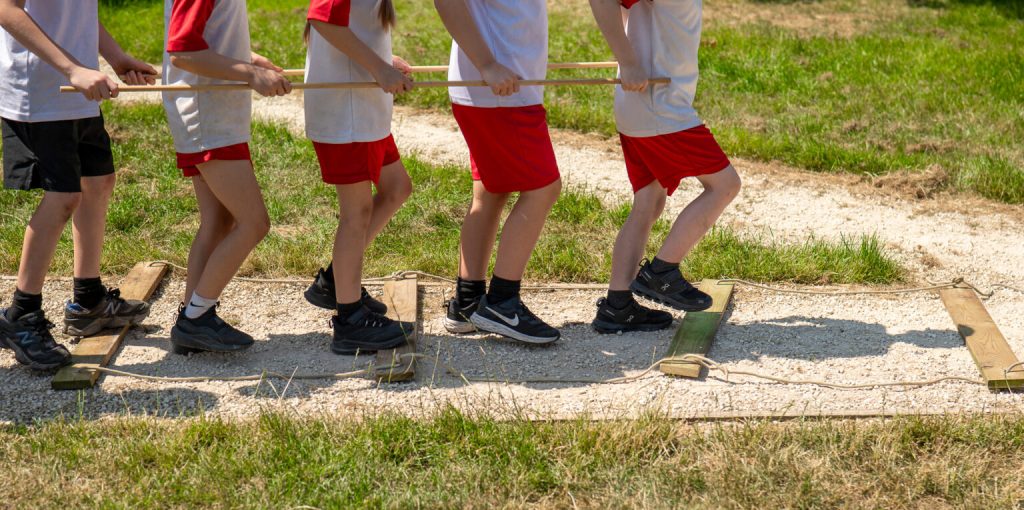
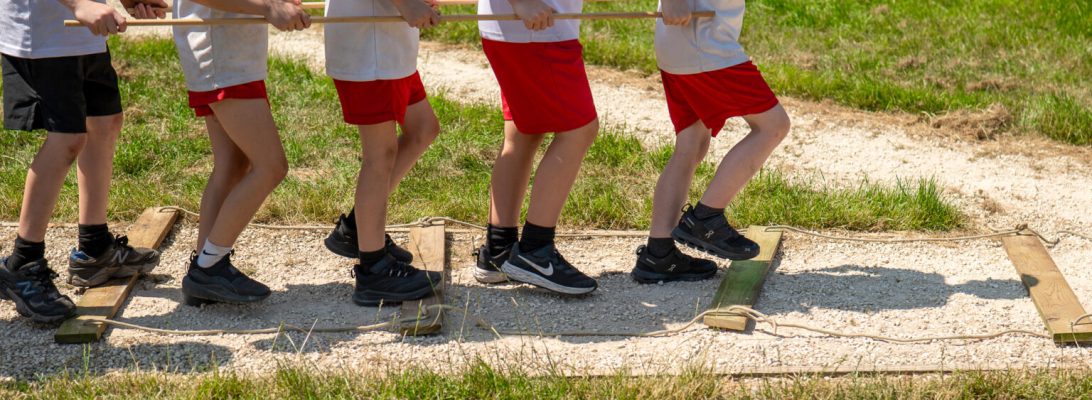
5 children walk across parallel wooden planks whilst carrying rods like they are train pistons

Twenty-four six and seven year olds at Longton Lane Primary school in Rainhill have spent three wonderful days listening to stories and making music inspired by the Liverpool to Manchester railway as part of a project by Sensory Creative Lab CIC. 
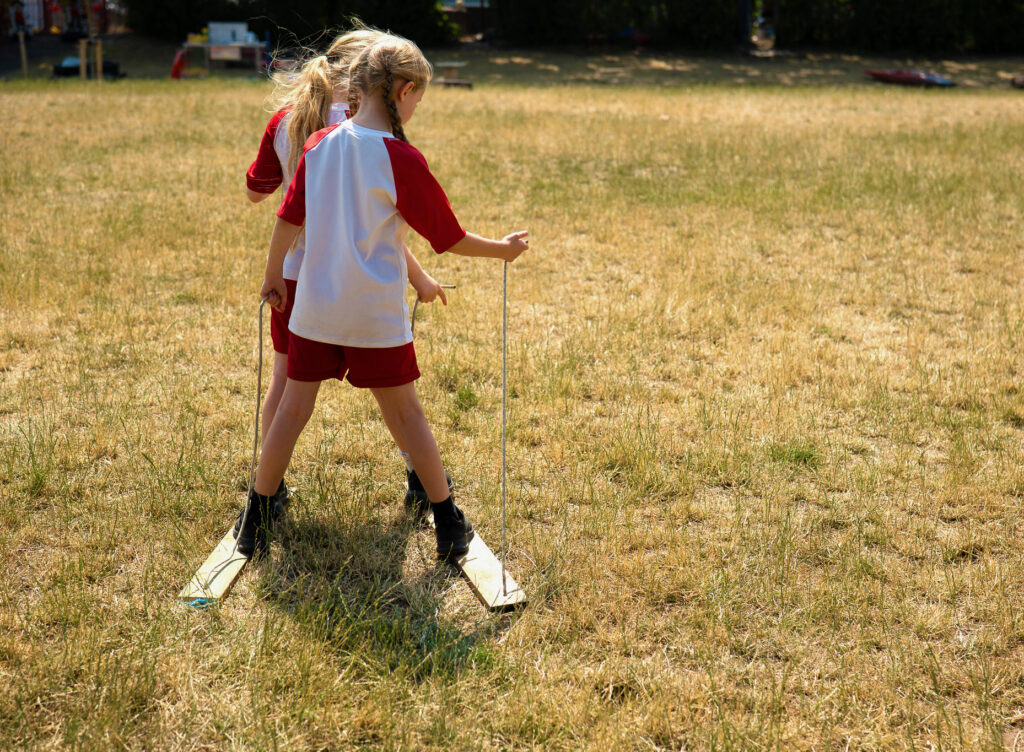
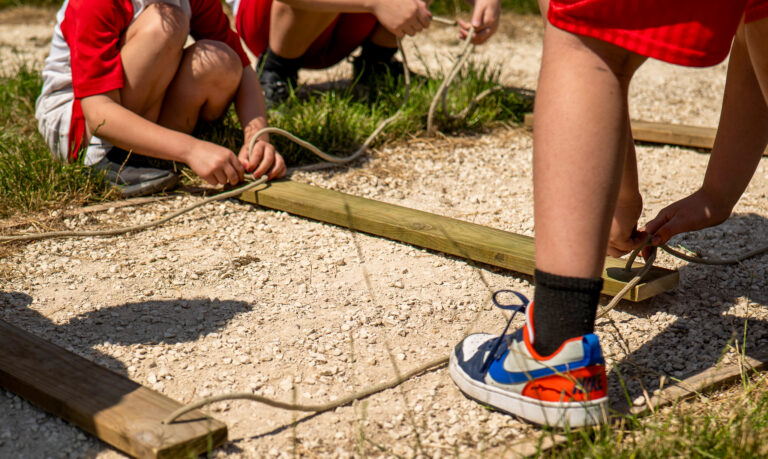
Two children in a field are standing with their feet on two wooden planks, holding onto rope that is connected to the plank.

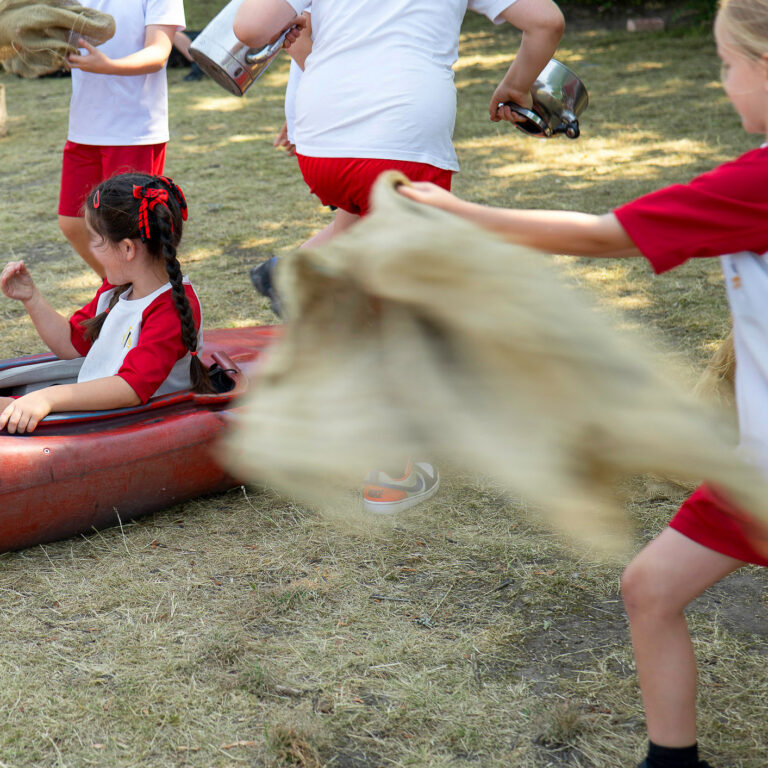
Using their playground equipment and following a pictorial map, they have traced the route of the line, solving the same engineering problems that George Stephenson faced; creating tunnels from tyres; bridges from blocks; finding out why Rainhill was chosen as the location for a fair competition; and stomping past the bog monsters of Chat Moss. Combining storytelling, imaginative play and sensory activities has given this Year 2 class an understanding of an important part of their local and nationally significant history.

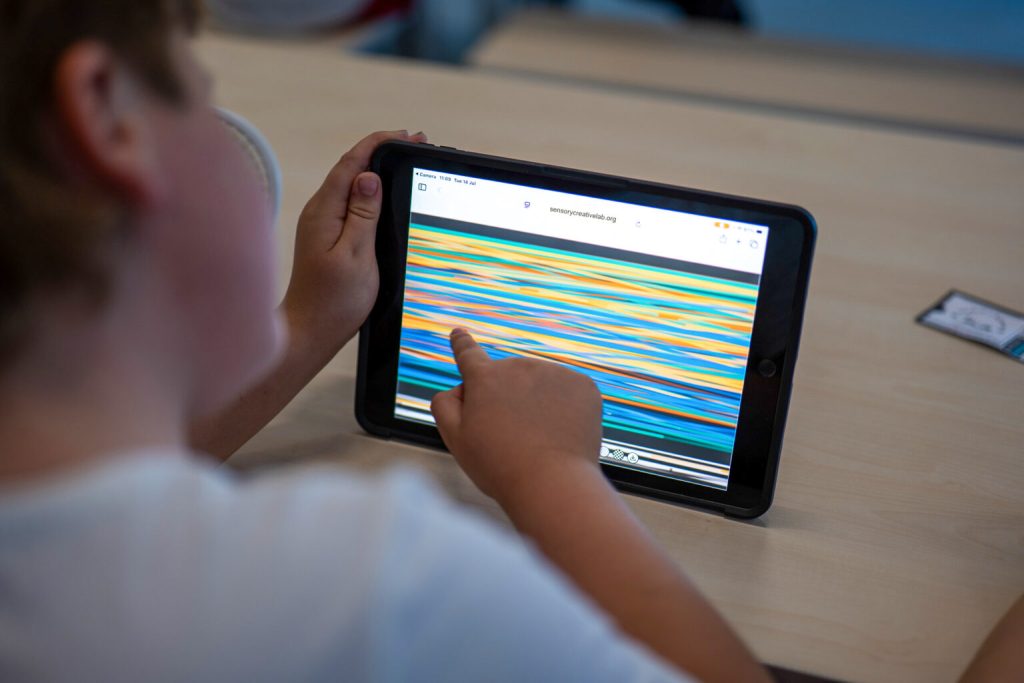
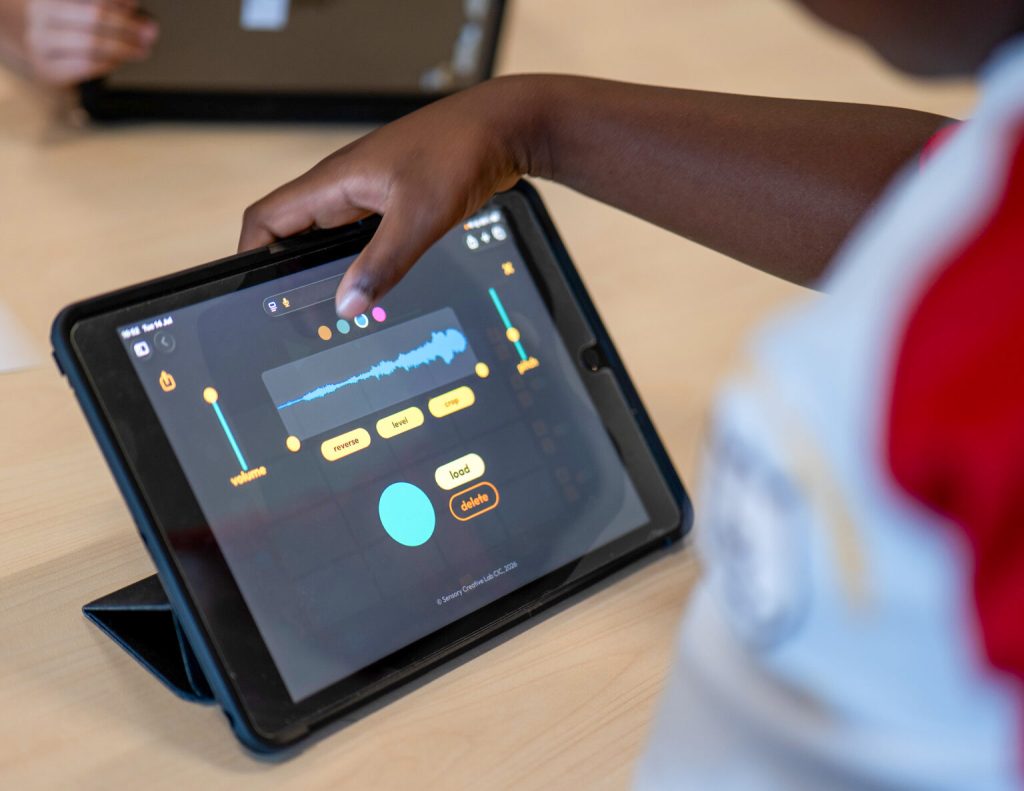
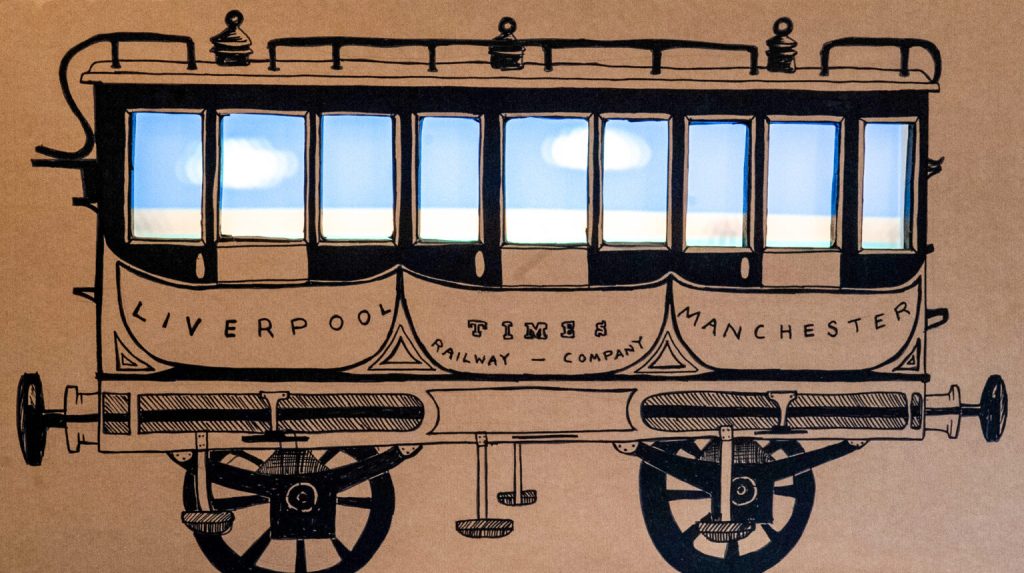
With this understanding, they have created a range of artworks. David Bixter guided them to experiment with the creation of sounds inspired by the railway. Working with accessible technologies, they used the school iPads to make sound loops that are inspired by the story of Rocket and the railway. These are paired up with digital motion drawings that flash past like a landscape reflected in a train window in a short film.

Building on their physical exploration of the route, the children have printed pictorial maps, filled with shapes, words and sounds. When everyone in the class unfolded them, their maps opened out to make a drawing nearly as long as the railway.
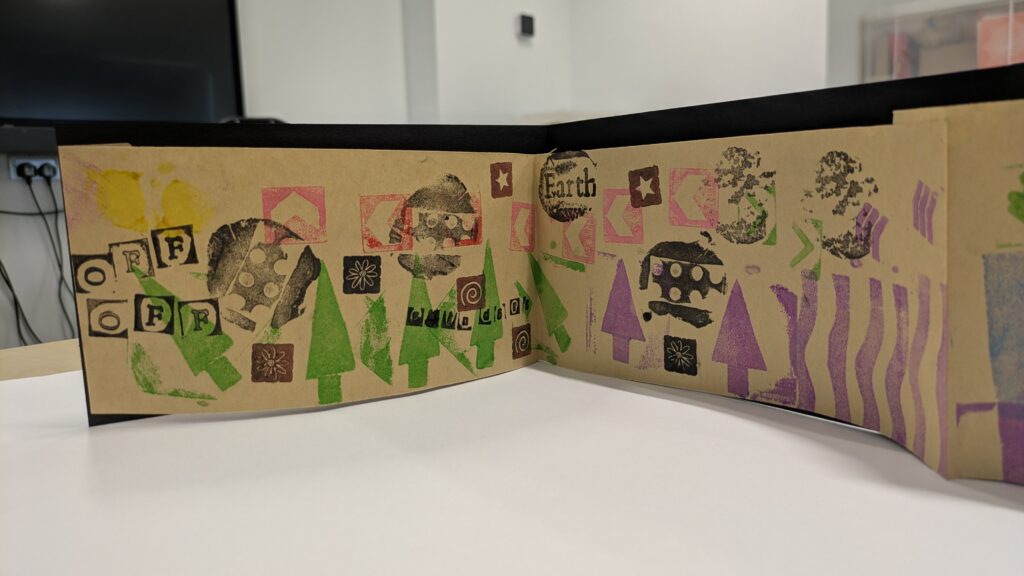
A page with colourful prints and patterns including green and purple trees, the words 'off off'

The children have thoroughly enjoyed being involved in the project. It has been well structured and engaging and the aspects covered by both Claire and Dave have inspired the children, with some even going home and continuing what they have learned. They have been so proud of what they have produced and some of our most reluctant learners have spoken in great detail about the exciting activities that they have taken part in. We are really happy to have been involved and would like to thank Claire and Dave for providing the children with such an enjoyable couple of days.

Helen Brougham, Y2 teacher
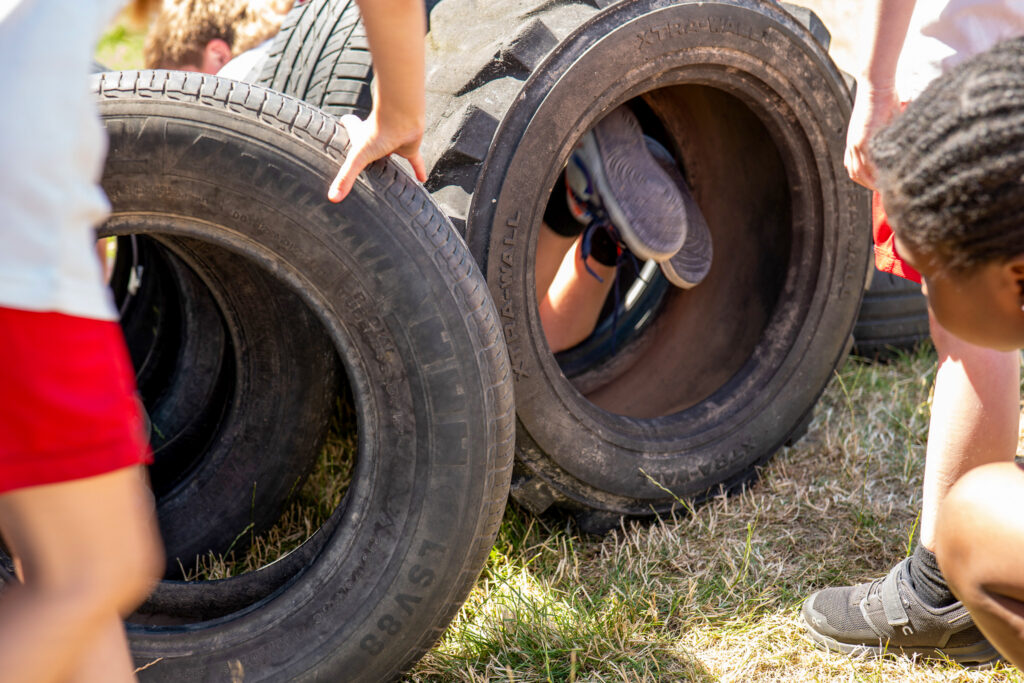
children are climbing through a tunnel of car tyres

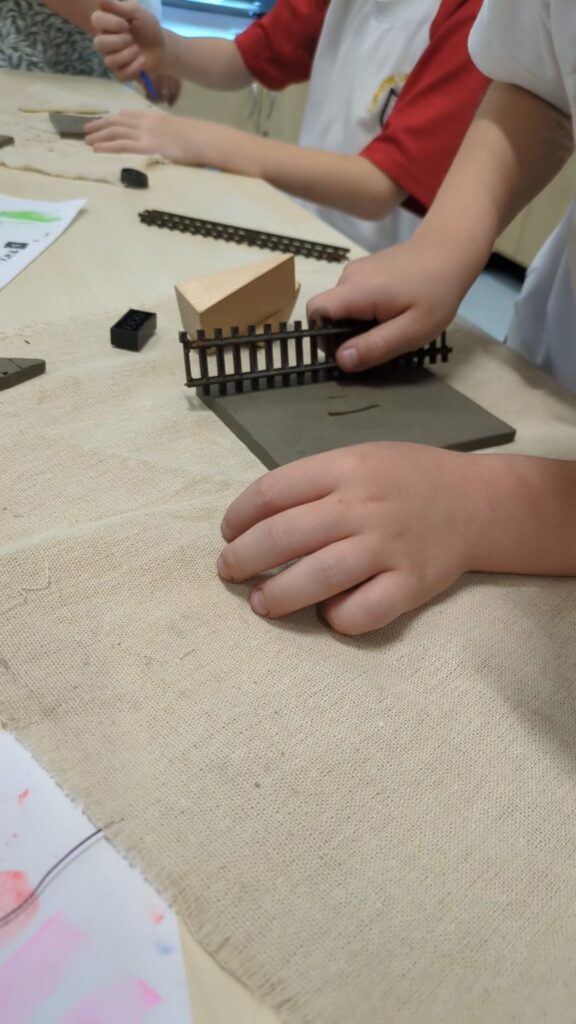
Longton Lane is a new school building and grounds, so the school asked if there was anything permanent that could go into their grounds. We’ve donated the two pairs of bog-stompers (wooden plank-skis) inspired by the navvies who built the line across Chat Moss to their play equipment, and on day 3 the children used all their creative skills and knowledge to make a series of clay tiles, that when fired, will return to school after the summer. The tiles feature imprints of textures they discovered in their explorations, station names and railway sounds, creating a tactile storytelling trail for the school to install in the grounds.

We’ve had a fun and imaginative time at Longton Lane Primary exploring the Liverpool to Manchester railway. We’ve read stories, created music inspired by the rhythms of the railway, unfolded maps to guide us past the Chat Moss bog monsters and created artworks along the way. The children have enjoyed exercising their imaginations and experimenting with creative processes and it’s been a joy to support them to create this wonderful work.

Claire Weetman, Sensory Creative Lab CIC
‘We built a railway’ was commissioned by Manchester Histories as part of their Rocket All Aboard programme. Made possible by Heritage Lottery Fund, supported by National Lottery Players.

Absence: exhibition at St George’s Hall

Absence, curated by sociologists Laura Harris and Maike Pötschulat, is a new group exhibition that brings together the photography of seven visual sociologists, alongside finalists from an open call for photography of absences in the Liverpool City Region. 

I’m really pleased that the two photographs that I submitted to the open call have been included in the show. Finding Solitude: Meadow, a photograph of my installation on Hilbre Island in 2025, features on the digital screen alongside 100 other images taken by photographers highlighting notions of absence – absence of people, absence of care or an absence of a physical presence such as spaces where buildings and homes once stood.

Finding Solitude: Island, which is a photograph of the chair I adapted during many visits to Hilbre, sitting alone on top of a rock stack in the bay, was wonderfully selected to be one of five finalists, with those photographs being printed and displayed as part of the exhibition. It sits alongside works by Paradise Made (I particularly enjoyed this photo that was included on the screen from within the recently demolished Hardshaw Centre in St Helens), Daniel Frost, Alisha Iqbal and Dan Murphy

Photo by Paradise Made. https://www.instagram.com/p/DJj5SVasTbJ/?img_index=1

The rest of the exhibition is a wonderful collection of visual documents of how life leaves traces behind, and a theme that I really identify with in my own work. Terence Heng and Gesche Würfel’s works document changing landscapes. A highway is routed through a Singapore cemetery in Heng’s work where he connects with the rituals that connect those present with the spirits and memories of absent ancestors, whilst Würfel cycles along the route of the Berlin wall, documenting six, fixed viewpoints at each 2.8Km stop, creating richly textured layered photo-composites of this once-political divide.

I recommend a look at Kyler Seleny’s Found Polaroid archive – a number of photographs are displayed that have been found at car boot and yard sales, and now members of the public are invited to contribute Flash Fiction stories to accompany the images. A layering of memory, documentary fact and the fictions that we read into other people’s lives. David Schalliol’s Isolated buildings are a series of beautiful images, documents of buildings that stand alone in their space – the ‘nail houses’ in their area that somehow defy the destruction of their neighbours. Similarly to the found polaroids, you can find yourself wondering who still lives in that building and what the story is. David spoke about the process behind his work at an enlightening panel discussion and shared how he had been invited to dinner with some of the residents of the buildings that feature – a reminder that as artists who observe other people’s lives, that we should do this with great care and attention to the ethics of this work.

Image credit: Paweł Starzec – Heliodrom, Mostar, 2017, from Makeshift series

The final room in the show features three photographers who all document absence in the context of conflict. Setareh Kazemi’s photojournalistic work in Iran highlights wonderful images of women and their daughters who want to feel seen by a female photographer when the world around them feels increasingly precarious. Manal Massalha’s Standing Tall series looks at Palestinian life and hardship in the Occupied Territories in the West Bank – saplings broken by vandalism that will no longer bear fruit sit with photographs of families who have suffered a similar fate. Makeshift, by Paweł Starzec features the sites that were places where atrocities happened during the Bosnian War – the current landscape now sculpted by the victors with the photographs of picturesque landscapes and banal urban spaces living at odds with the text accompanying each image that documents what evil humans are capable of.

The exhibition continues until 11th July at the Stable Gallery, St George’s Hall, Liverpool, and a tour by the curators will run on 13th June 1-2pm.

More information about the exhibition here.

The Giant’s Blankets at Sefton Park Palm House

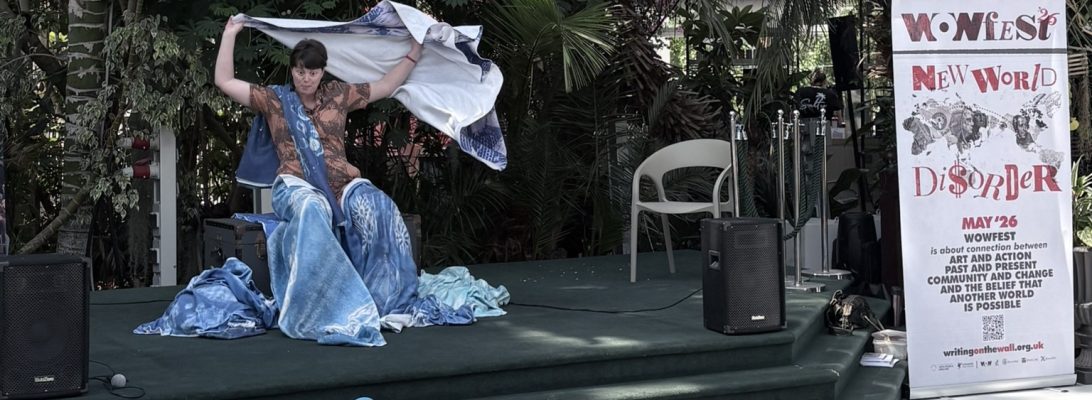
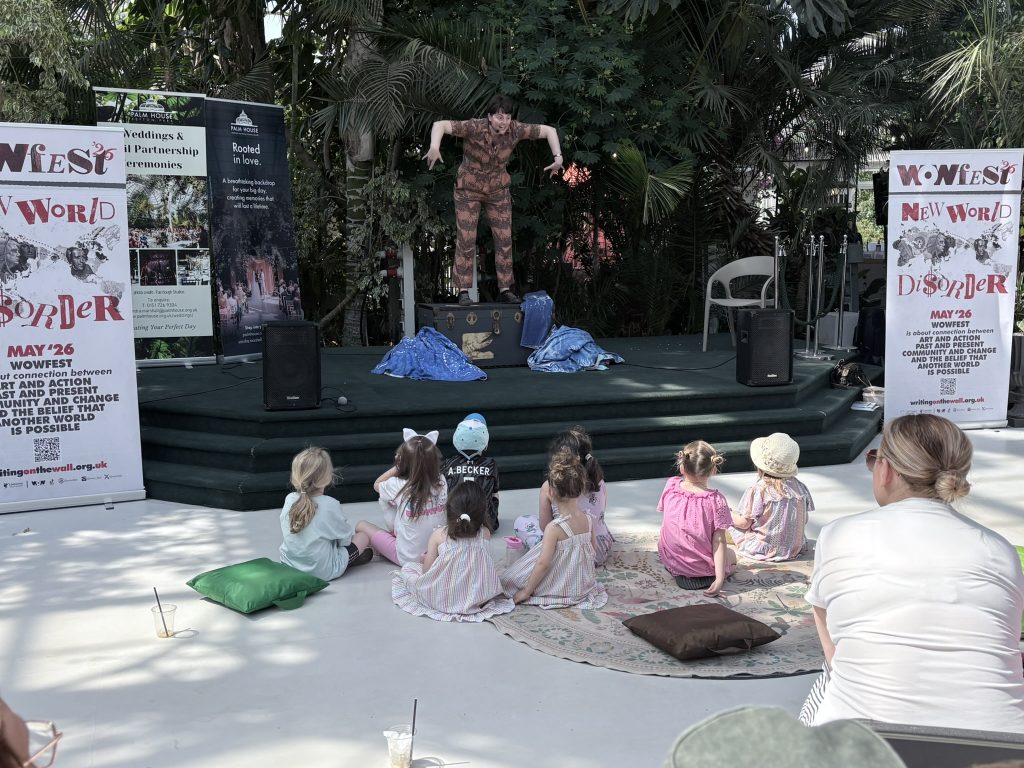
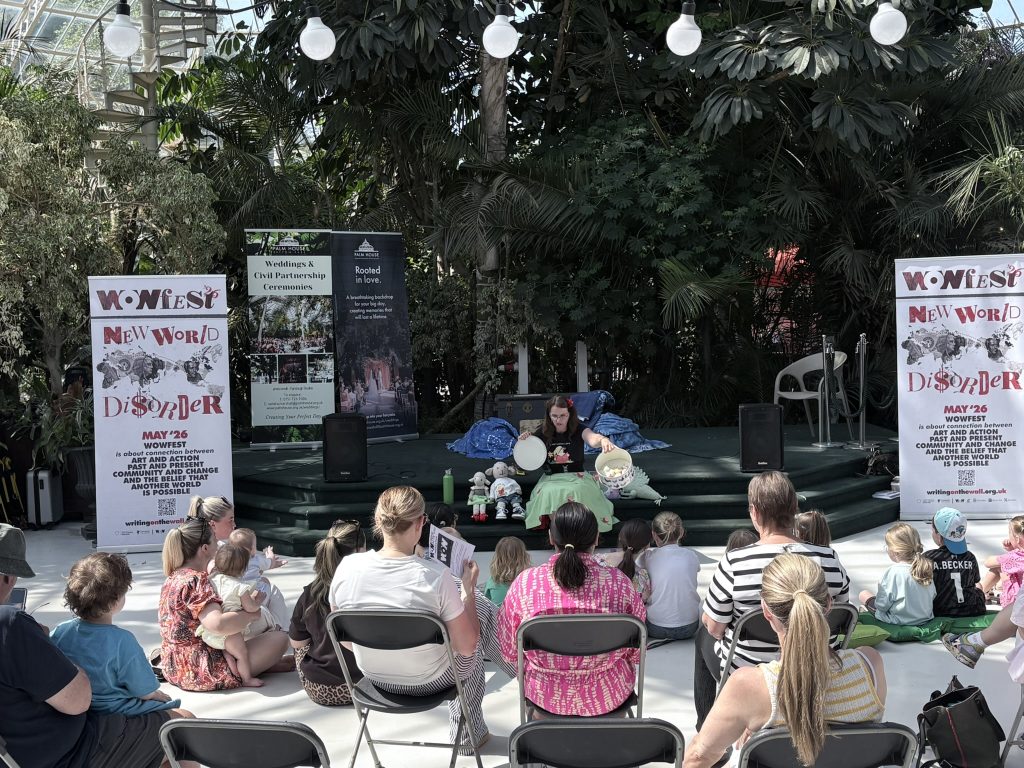
On a hot May morning, I doubted the sensibility of my past decisions to create a storytelling performance where I cover myself in 11 blankets and headed to Sefton Park Palm House to perform The Giants Blankets. Thankfully I was able to complete the performance in a very large greenhouse without passing out and I also now know that I can perform this with amplification as I channelled my inner Britney and used a headset mic.

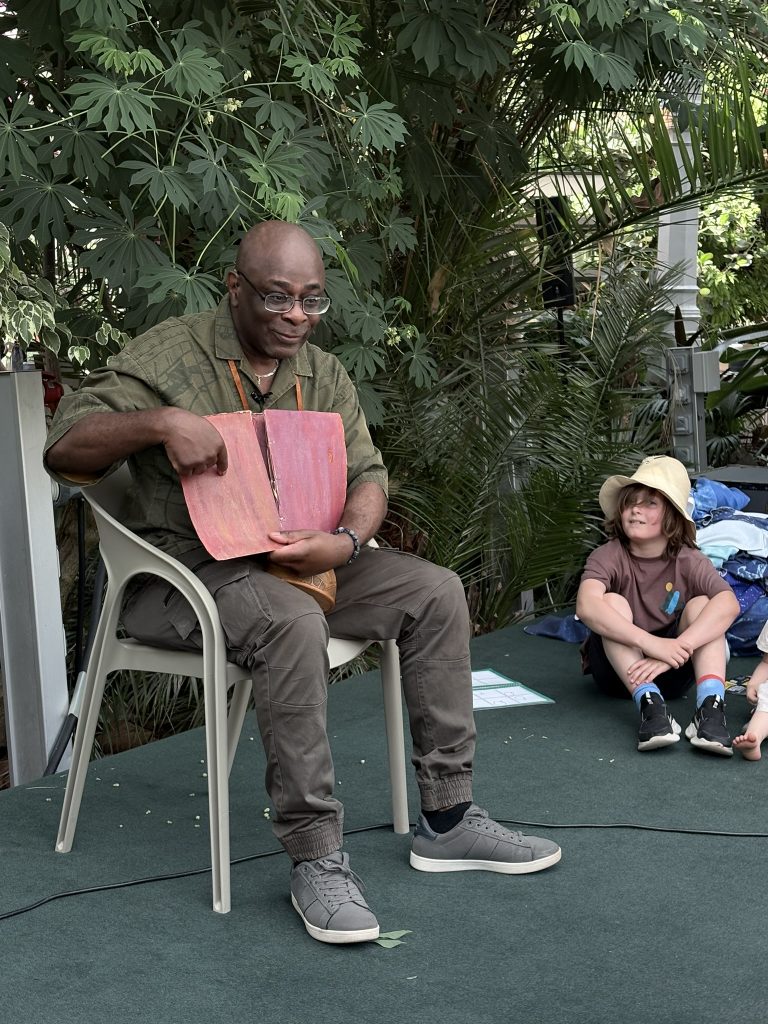
Part of a line up of three storytellers for WoWFEST’26, the Giant’s Blankets story of kindness, and community in the face of punishing storms and loneliness fitted the festival theme ‘New World Disorder’. Jude Lennon gave a masterclass in storytelling with her recounting of both classic tales and her own ‘Lamby and the Liver Bird‘, and following my performance, Patrick Graham brought the audience onto the stage where he shared the secrets of his magic book of storytelling – if you couldn’t see the stories on the (blank) pages at the start, Patrick’s tales exercised everyone’s imagination to see the stories of a tortoise called everybody and an excerpt from his own tale, The Golden Water and the Enchanted Forest.

There’s plans for the Giant to head out on another adventure in October this year, if you’d like her to come and visit your community, library or school, get in touch and keep an eye on my socials for where she will take TWO GIANT STEPS to next.

We Reside* Here

As the lead artist for Artists Together – the artist development strand of work for St Helens Libraries and Arts NPO – I’ve been working on a programme of work during 2023 called Reside*

During 2023 St Helens has been the Liverpool City Region Borough of Culture, so for this creative year the programme was built around this thought:

“What if every artist who is RESIDEnt in St Helens was recognised as an artist-in-RESIDEnce for the year?”

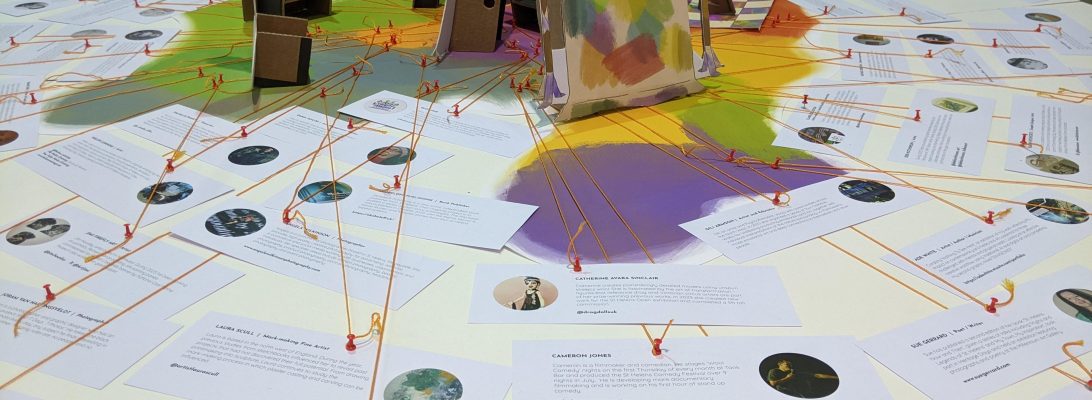
We started the year with a pop up exhibition at The World of Glass that mapped the locations of artists around the borough and shared what they were planning on working on during the year. Following opportunities for artists to get help with funding, planning and commissions, opportunities to make work together, 1-2-1 feedback from curators and producers and chances to share ideas with each other, we have arrived at the end of the year and the production of We Reside* Here.

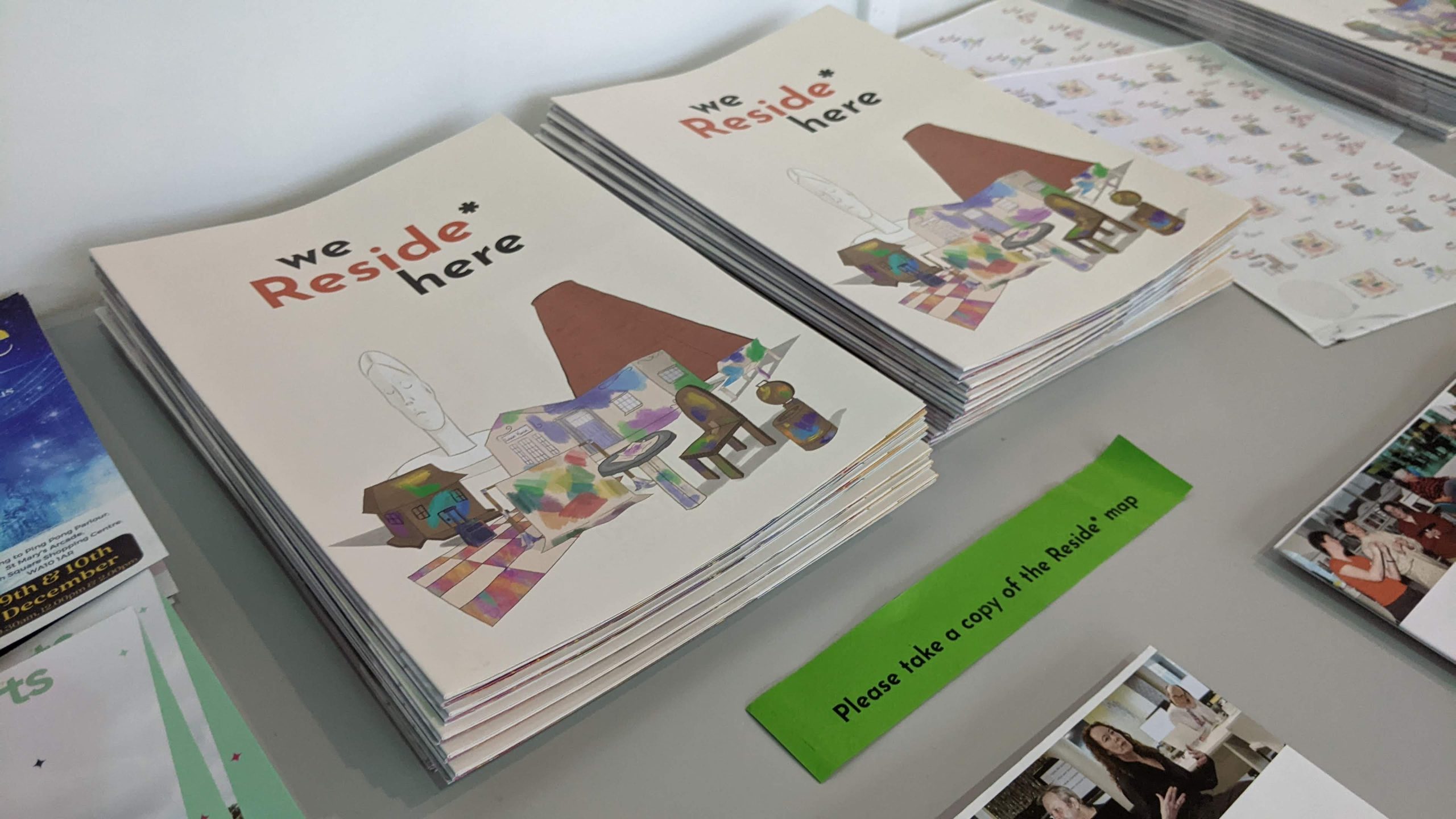
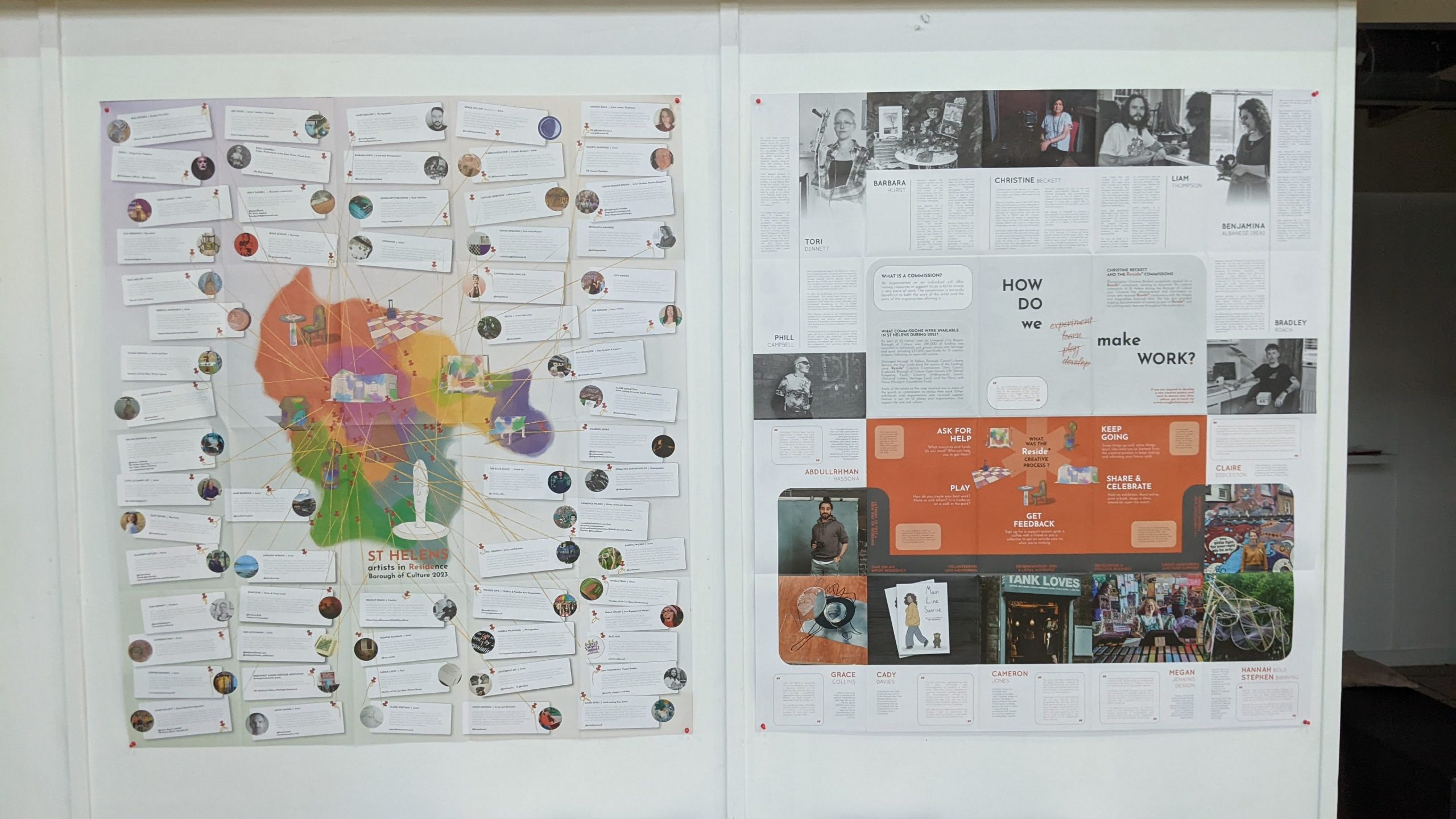
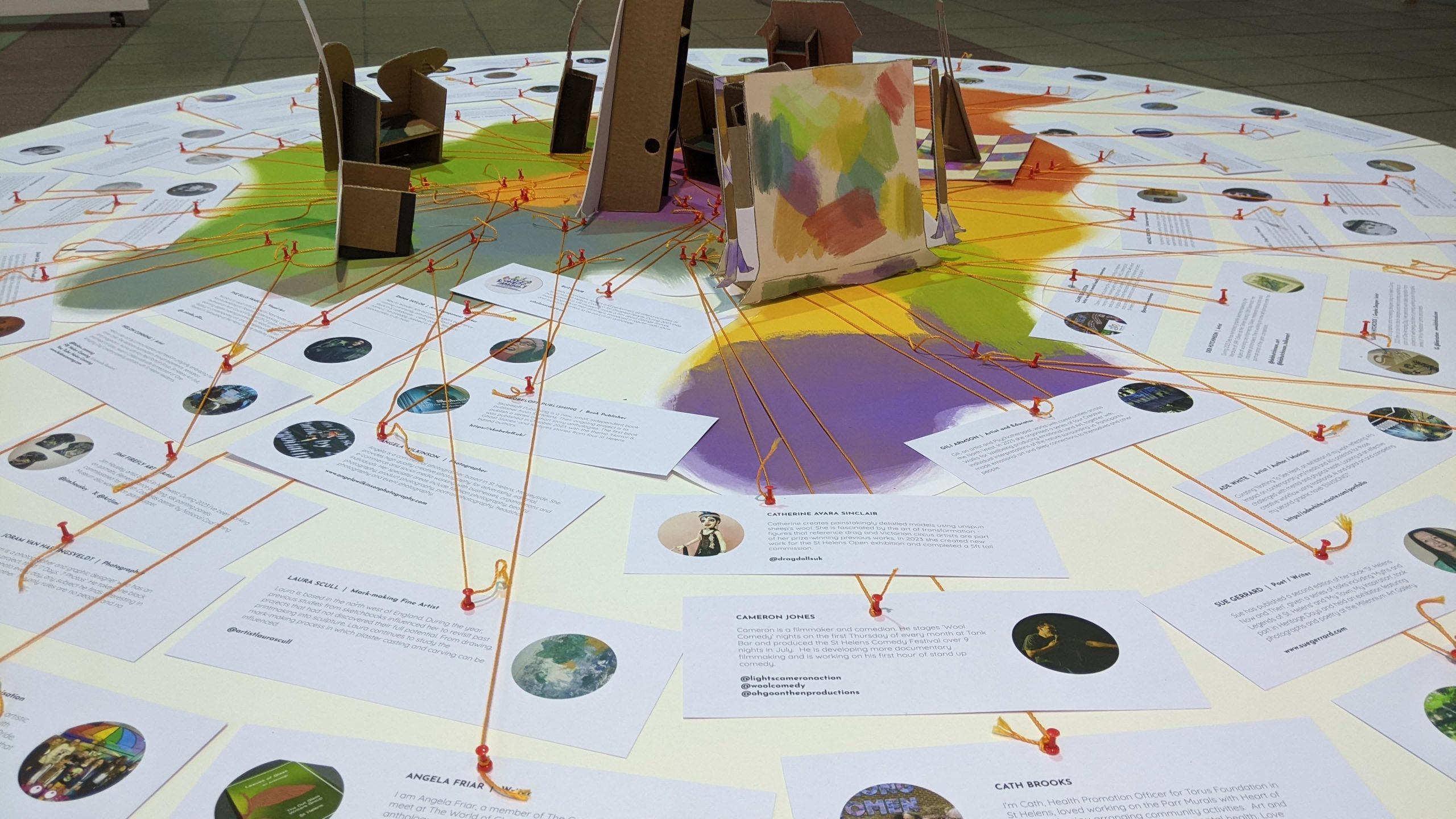
We Reside* Here is both a publication and exhibition that maps and showcases the work of over 60 artists in St Helens. The document features a map, illustrated by Cady Davies and with graphic design by Karen Hitchcock, that places each artist in the area of St Helens that they are based, showing our audience that artists aren’t rare beings, only to be found in the big cities of Liverpool and Manchester. These artists are our neighbours, the people you meet on the school run, the folks standing at the bus stop, and they are only a small proportion of the people who bring light, colour, stories and the joy of creativity into St Helens.

As well as mapping some of the artistic population, the We Reside* Here document provides guidance to artists. There are examples of how a number of artists are making their work, designed to provide inspiration and support to other artists seeking to develop. A list of organisations who support people’s creativity features, along with a breakdown of what the process of Reside* was during 2023, so that other artists can pick this up and make new work in the future.

The exhibition that accompanies We Reside* Here is installed at St Mary’s Market in the large event space from 25th November – 20th December. This features an installation of the map, with its cardboard-cut-out style illustrations and showcases the work of many of the 60+ artists, whilst signposting audiences to other works that exist in locations around the town.

Artists Together and We Reside* Here is supported by